


Roper-Logan-Tierney (RLT) Nursing Model: 12 Activities of Living, Assessment & Care Plan (2026)
Roper-Logan-Tierney (RLT) Nursing Model: 12 Activities of Living, Assessment & Care Plan (2026)
Direct Answer & Quick Summary: What is the Roper-Logan-Tierney (RLT) Model of Nursing?
The Roper-Logan-Tierney (RLT) Model of Nursing, originally developed in 1980 by Nancy Roper, Winifred Logan, and Alison Tierney (subsequently revised in 1996 and 2000), is one of the most widely implemented conceptual frameworks for nursing assessment and individualized care planning across the United Kingdom (NHS), Ireland, Australia, and Commonwealth healthcare systems. Built upon the philosophy that living is a dynamic, complex process encompassing biological, psychological, social, and spiritual dimensions, the RLT model articulates nursing care around five interrelated components: the Lifespan continuum (conception to death), the Dependence/Independence Continuum, the 12 Activities of Living (ALs / ADLs), the Five Factors Influencing Activities of Living (biological, psychological, sociocultural, environmental, and politico-economic), and Individuality in Living. By moving nursing away from purely medical diagnostic labels toward holistic, patient-centered functional capability, the RLT framework empowers nurses to assess actual and potential self-care deficits, formulate SMART clinical goals, and implement evidence-based interventions. Academic mentors at AssignPro Solutions provide healthcare students globally with distinction-grade guidance on formulating RLT-based clinical care plans, university case studies, and OSCE documentation.

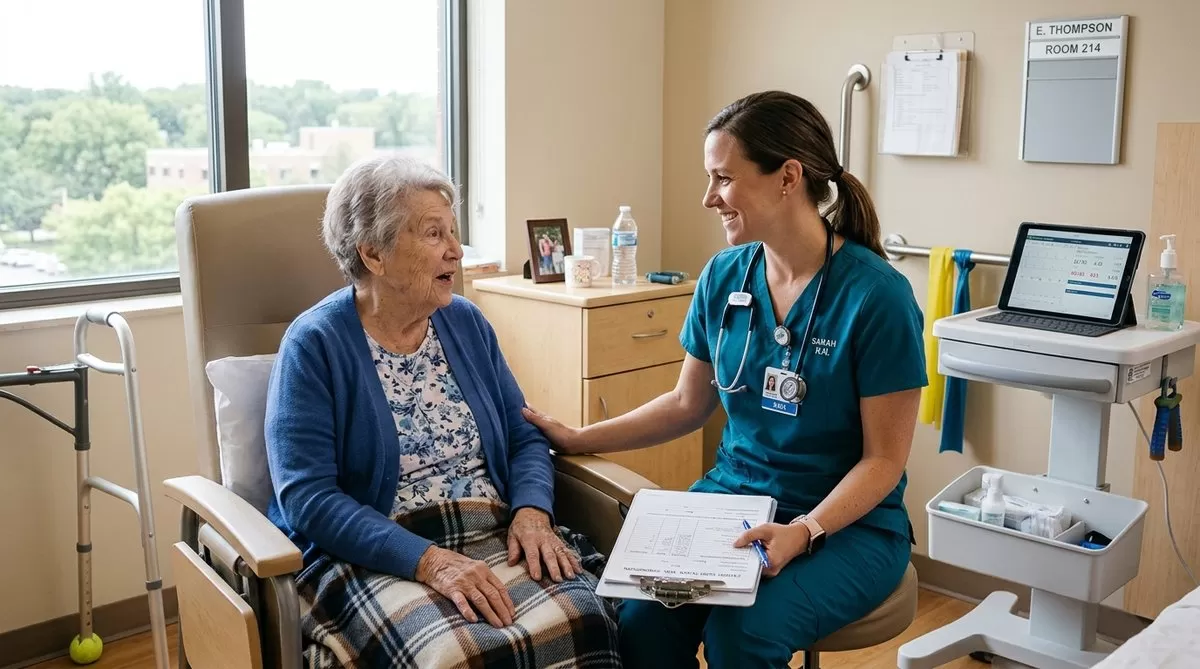
Figure 1: Registered clinical nurse conducting an Activities of Living (ADL) functional assessment using the Roper-Logan-Tierney (RLT) nursing care planning framework.
Table of Contents
- 1. Theoretical Origins & Philosophical Foundations of the RLT Model
- 2. The 5 Core Components of the Roper-Logan-Tierney Architecture
- 3. In-Depth Breakdown: The 12 Activities of Living (ALs) & Assessment Triggers
- 4. The 5 Factors Influencing Activities of Living: The Holism Blueprint
- 5. Complete Worked Clinical Care Plan: Postoperative Neck of Femur (NOF) Fracture
- 6. Comparative Analysis: RLT vs. Orem's Self-Care vs. Virginia Henderson vs. Roy Adaptation
- 7. University Academic Rubric: Distinction (85%+) Standards vs. Common Student Pitfalls
- 8. Frequently Asked Questions (FAQs)
1. Theoretical Origins & Philosophical Foundations of the RLT Model
Prior to the publication of Nancy Roper's monograph in 1976 and the collaborative landmark text "The Elements of Nursing" (Roper, Logan, & Tierney, 1980), hospital nursing care was overwhelmingly organized around the biomedical model. Patients were categorized by their medical pathology (e.g., "the appendectomy in bed 4" or "the diabetic ulcer in bed 12"), with nursing tasks executed mechanically based on physician prescriptions.
Roper, Logan, and Tierney recognized that nursing possesses a unique, autonomous scope of practice distinct from medicine: while medicine focuses on diagnosing and treating pathology, nursing focuses on assessing and supporting human living in the presence of health, illness, rehabilitation, or dying. Drawing upon Virginia Henderson's 14 Basic Human Needs and Abraham Maslow's Hierarchy of Needs, the authors synthesized living into 12 universal activities. They postulated that every human being engages in these activities daily, but their capacity to perform them independently fluctuates based on their developmental lifespan, acute or chronic physiological illness, psychological coping, socioeconomic environment, and societal policies.
2. The 5 Core Components of the Roper-Logan-Tierney Architecture
The RLT model is structured upon five mutually reinforcing pillars that form a unified assessment landscape:
1. The Lifespan
Conceptualizes living along a continuous linear chronological trajectory from conception, through intrauterine life, neonatal development, childhood, adolescence, adulthood, senescence, and ultimately death. Functional independence naturally evolves and varies across developmental stages.
2. Dependence / Independence Continuum
Acknowledges that an individual's autonomy across each activity of living is not an absolute all-or-nothing binary, but rather a dynamic continuum. A patient may be completely independent in communicating, yet totally dependent in mobilizing and personal cleansing.
3. The 12 Activities of Living (ALs)
The concrete operational core of the model. These 12 activities represent the physiological, psychosocial, and environmental tasks essential for human health, functional survival, and dignity.
4. Five Factors Influencing ALs
Ensures holistic analysis by investigating the Biological, Psychological, Sociocultural, Environmental, and Politico-economic determinants that constrain or facilitate each activity of living.
5. Individuality in Living
The philosophical summit: every person negotiates their activities of living uniquely according to their personal routines, beliefs, cultural norms, and choices. The nurse's role is to preserve this individuality.
3. In-Depth Breakdown: The 12 Activities of Living (ALs) & Assessment Triggers
When conducting a comprehensive admission or rehabilitation assessment, the nurse interrogates the patient's baseline capabilities and current clinical deficits across each of the 12 Activities of Living:
| Activity of Living (AL) | Clinical Assessment Indicators & Triggers | Common Nursing Deficits & Vulnerabilities |
|---|---|---|
| 1. Maintaining a Safe Environment | Physical safety, fall risk assessment (Morse / STRATIFY), infection prevention, sensory deficits (vision, hearing), bed rail safety, medication hazards. | High risk of inpatient falls post-sedation, confusion, delirium, peripheral neuropathy, call bell out of reach. |
| 2. Communicating | Verbal fluency, non-verbal cues, expressive/receptive aphasia, cognitive orientation (4AT score), hearing aids, language barriers. | Post-stroke expressive dysphasia, postoperative cognitive dysfunction, endotracheal intubation, severe anxiety. |
| 3. Breathing | Respiratory rate, SpO2, work of breathing, sputum production, auscultation (wheeze, crackles), supplemental oxygen therapy. | Atelectasis secondary to postoperative pain hypoventilation, COPD exacerbation, pulmonary edema, bronchospasm. |
| 4. Eating & Drinking | Nutritional screening (MUST tool), swallowing screening (dysphagia), dentition, dietary preferences, fluid balance, IV access. | Aspiration risk, nausea/vomiting post-anesthesia, anorexia, dysphagia, dehydration, poor oral intake. |
| 5. Eliminating | Urinary continence, catheter presence, fluid output, bowel frequency/consistency (Bristol Stool Chart), flatus, stoma output. | Opioid-induced constipation, acute urinary retention post-epidural, urinary tract infection (CAUTI), fecal incontinence. |
| 6. Personal Cleansing & Dressing | Skin integrity (Waterlow / Braden scale), personal hygiene capability, grooming routines, ability to dress upper and lower body. | Inability to wash lower extremities following hip arthroplasty, pressure injury risk, surgical wound dressing protection. |
| 7. Controlling Body Temperature | Core body temperature monitoring, shivering, diaphoresis, thermoregulation ability, appropriate ambient bedding and clothing. | Hypothermia post-theatre, pyrexia secondary to surgical site infection or sepsis, impaired autonomic regulation. |
| 8. Mobilizing | Gait assessment, weight-bearing status, physiotherapy transfer plans, assistive mobility devices (Zimmer frame, crutches), joint stiffness. | Strict non-weight-bearing restrictions, pain on movement, muscle atrophy, deep vein thrombosis (DVT) stasis risk. |
| 9. Working & Playing | Employment concerns, financial stress, leisure hobbies, boredom during hospital stay, social interaction in the bay. | Loss of occupational role, depression regarding prolonged sick leave, sensory deprivation in isolation rooms. |
| 10. Expressing Sexuality | Body image perception, impact of scars/stomas, sexual health concerns, gender identity, relationship dynamics, dignity in care. | Altered body image following surgical amputation or mastectomy, embarrassment during intimate personal cleansing. |
| 11. Sleeping | Sleep patterns, night-time waking, ward noise, nocturnal medication administration, sleep apnea (CPAP), pain interfering with rest. | Sleep fragmentation from hospital telemetry alarms, nocturnal confusion/sundowning, uncontrolled breakthrough pain. |
| 12. Dying | End-of-life wishes, advance directives (DNACPR / ReSPECT forms), palliative symptom control, spiritual and cultural rituals. | Terminal agitation, uncontrolled pain in palliative phase, existential distress, lack of clear advance care planning. |
4. The 5 Factors Influencing Activities of Living: The Holism Blueprint
A common error made by nursing students is treating the 12 ALs as an isolated physical checklist. Roper, Logan, and Tierney explicitly designed the Five Factors to ensure that every single activity is filtered through a multidimensional lens:
- 1. Biological Factors: The physiological, anatomical, and pathological realities (e.g., musculoskeletal trauma, age-related degeneration, pharmacological side effects).
- 2. Psychological Factors: The cognitive, emotional, and spiritual state (e.g., health literacy, fear of falling, clinical depression, locus of control).
- 3. Sociocultural Factors: Cultural beliefs, family expectations, religious obligations, dietary taboos, and linguistic background.
- 4. Environmental Factors: The physical surroundings (e.g., hospital ward lighting, scatter rugs at home, stairs, air quality, bathroom layout).
- 5. Politico-Economic Factors: Socioeconomic status, access to social care funding, NHS community equipment allocation, disability benefits, and legal healthcare rights.
5. Complete Worked Clinical Care Plan: Postoperative Neck of Femur (NOF) Fracture
The following clinical care plan illustrates the distinction-grade application of the RLT model for a real orthopedic case study:
Patient Profile: Mrs. Evelyn Davis (Age 74)
Clinical Scenario: Mrs. Davis is a 74-year-old widowed female admitted following a mechanical fall at home. She sustained a displaced intracapsular fracture of the right neck of femur and underwent an uneventful right cemented hemiarthroplasty yesterday. Past medical history: Osteoporosis, mild hypertension. Today is Postoperative Day 1 (POD 1).
Care Plan Slice 1: Activity of Living — Mobilizing
Assessment & Deficit: Complete dependence in mobilizing. Unable to weight-bear or transfer from bed to chair independently due to right hip pain (Visual Analogue Scale 7/10 on movement) and surgical dislocation precautions (no flexion > 90°, no adduction across midline, no internal rotation).
SMART Nursing Goal: Within 24 hours (by POD 2), Mrs. Davis will transfer safely from bed to bedside armchair with the assistance of two nurses and a high-frame gutter walker, maintaining pain scores ≤ 3/10 during mobilization.
Evidence-Based Interventions & Rationales:
1. Administer prescribed oral analgesia (Paracetamol 1g PO and Oxycodone 5mg PO) 45 minutes prior to planned physiotherapy transfer (NICE Guideline CG124 on hip fracture management). Rationale: Timed multimodal analgesia prevents breakthrough movement pain and facilitates early weight-bearing.
2. Maintain an abduction wedge between legs when resting in bed and position a high-seat chair with bilateral armrests. Rationale: Prevents acute postoperative prosthetic dislocation by preventing hip adduction.
3. Fit bilateral graduated compression stockings (TEDs) and administer Enoxaparin 40mg SC daily as prescribed. Rationale: Pharmacological and mechanical venous thromboembolism (VTE) prophylaxis (NICE NG89).
Evaluation (POD 1, 16:00): Goal achieved. Mrs. Davis successfully transferred to the armchair with 2-nurse support. Pain reported at 3/10. No signs of dizziness; telemetry remained stable (BP 124/76 mmHg).
Care Plan Slice 2: Activity of Living — Eliminating
Assessment & Deficit: High risk of opioid-induced constipation secondary to immobility and postoperative oral oxycodone therapy. Bowels not opened since admission (3 days ago). Abdomen soft, non-distended, active bowel sounds present in all 4 quadrants.
SMART Nursing Goal: Mrs. Davis will establish regular bowel elimination and pass a soft, formed stool (Bristol Stool Form Scale type 3 or 4) within 48 hours without excessive straining.
Evidence-Based Interventions & Rationales:
1. Administer prescribed prophylactic osmotic and stimulant laxatives (Lactulose 15 mL BD and Senna 15 mg nocte) concurrently with opioid analgesia (British National Formulary / RCN Guidance). Rationale: Proactive bowel regimens prevent severe fecal impaction in immobilized orthopedic patients.
2. Encourage oral fluid intake of at least 1,800–2,000 mL per 24 hours, collaborating with catering to provide preferred hot drinks and fresh water. Rationale: Adequate hydration softens the stool bolus in the colon.
3. Provide privacy and a raised toilet seat / commode rather than a bedpan whenever mobility permits. Rationale: Normal physiological posture (knees flexed, trunk upright) facilitates gravity-assisted defecation and preserves dignity.
Evaluation (POD 2, 10:00): Goal partially achieved. Bowels opened at 09:30, passed moderate soft stool (Bristol type 4). No abdominal cramps or discomfort reported.
6. Comparative Analysis: RLT vs. Orem's Self-Care vs. Virginia Henderson vs. Roy Adaptation
| Nursing Model | Core Theoretical Metaphor | Assessment Units | Primary Clinical Strengths |
|---|---|---|---|
| Roper-Logan-Tierney (RLT) | The Process of Living across the Lifespan | 12 Activities of Living + 5 Determinant Factors | Highly intuitive, standardized documentation, excellent for rehabilitation, elderly care, and acute adult surgical wards. |
| Orem's Self-Care Deficit Theory | Self-Care Agency vs. Therapeutic Self-Care Demand | Universal, Developmental & Health-Deviation requisites | Exceptional for chronic illness self-management (diabetes, renal dialysis, hypertension). |
| Virginia Henderson's Model | Assisting the individual to achieve peaceful death or independence | 14 Fundamental Needs | Clear humanistic framing, historical foundation for modern patient-centered practice. |
| Sister Callista Roy Adaptation Model | The human being as an adaptive biopsychosocial system | 4 Adaptive Modes: Physiological, Self-concept, Role function, Interdependence | Powerful framework for mental health nursing, oncology adjustment, and critical care coping. |
7. University Academic Rubric: Distinction (85%+) Standards vs. Common Student Pitfalls
Top Student Mistake: Producing Generic Care Plans
Examiners consistently penalize assignments that state generic interventions like "Encourage fluids" or "Assist with washing." Distinction-grade care plans demand precise clinical specificity: state the exact volume of fluid (e.g., "1,800 mL/day recorded on fluid chart"), exact mobility aids, specific validated assessment scales (Waterlow, MUST, Bristol Stool Chart), and cite peer-reviewed clinical guidelines for every action!
8. Frequently Asked Questions (FAQs)
Q1: What is the difference between ALs and ADLs in the RLT model?
In the original literature by Roper, Logan, and Tierney, they utilized the term Activities of Living (ALs) to emphasize that living encompasses leisure, sexuality, and death—not just functional "daily" chores. However, in modern clinical NHS practice and university rubrics, ALs and Activities of Daily Living (ADLs) are frequently used interchangeably.
Q2: Why are the 5 Influencing Factors so important in RLT care planning?
Without the 5 factors (biological, psychological, sociocultural, environmental, politico-economic), an RLT assessment degenerates into a superficial mechanical checklist. The factors provide the explanatory mechanism for why a patient has a self-care deficit and dictate how care must be customized to their cultural values, financial constraints, and home environment.
Q3: How does AssignPro Solutions help nursing students with care planning assignments?
Our team of registered nurses and healthcare academic writers at AssignPro Solutions assists students with formulating distinction-level care plans, conducting clinical literature syntheses, linking interventions to NICE/WHO guidelines, and achieving First-Class academic marks.