


ABCDE Assessment in Nursing: Step-by-Step Protocol & OSCE Guide
100% Human Authorship Guarantee:
AssignPro Solutions provides verified, custom-researched ABCDE Assessment in Nursing: Step-by-Step Protocol & OSCE Guide. Every paper is authored by experienced postgraduate and doctoral specialists with verified Turnitin authenticity reports, unlimited revisions, and express turnaround.
ABCDE Assessment in Nursing: Step-by-Step Protocol, Case Study & OSCE Guide (2026)
ABCDE Assessment in Nursing: Step-by-Step Protocol, Case Study & OSCE Guide (2026)
Direct Answer & Quick Summary: What is the ABCDE Assessment in Nursing?
The ABCDE Assessment—standing for Airway, Breathing, Circulation, Disability, and Exposure—is the globally recognized, gold-standard systematic framework used by nurses, midwives, and healthcare practitioners to rapidly evaluate, stabilize, and manage critically unwell or clinically deteriorating patients. Formally endorsed by the Resuscitation Council UK, the Australian Commission on Safety and Quality in Health Care (ACSQHC), the American Heart Association (AHA), and the World Health Organization (WHO), the ABCDE approach enforces a strict, hierarchical algorithm of clinical prioritization: life-threatening problems must be identified and corrected before progressing to subsequent stages. Operating alongside physiological track-and-trigger tools like the National Early Warning Score (NEWS2), ABCDE provides student nurses and registered clinicians with an unambiguous structure to detect subtle signs of physiological decline, enact time-critical interventions (such as oxygen titration, airway repositioning, and fluid resuscitation), and escalate concerns using structured handover frameworks like SBAR. Clinical nurse educators and academic mentors at AssignPro Solutions guide university nursing scholars in mastering authentic ABCDE bedside documentation, OSCE simulation stations, and distinction-grade clinical reasoning case study assignments.

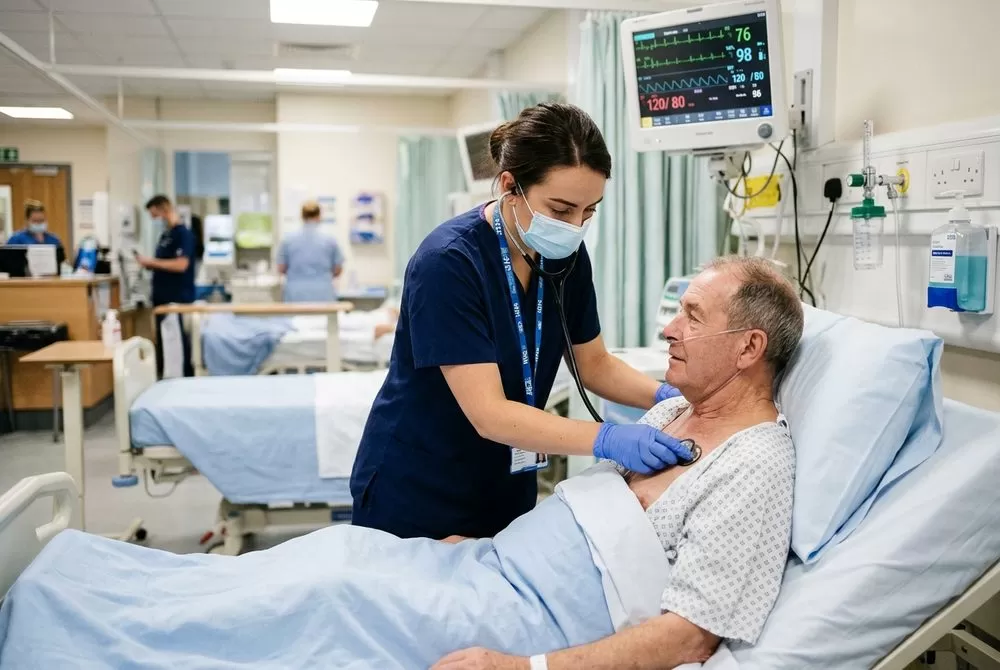
Figure 1: Registered clinical nurse systematically conducting an ABCDE chest auscultation and vital signs evaluation on an acute hospital patient.
Table of Contents
- 1. Clinical Rationale: Why the ABCDE Approach Saves Lives in Acute Care
- 2. The Complete Step-by-Step ABCDE Protocol (Airway to Exposure)
- 3. Integrating ABCDE with NEWS2 Scoring and Clinical Escalation Pathways
- 4. Worked Clinical Case Study: Acute Sepsis Deterioration & Respiratory Compromise
- 5. Time-Critical SBAR Handover Script for Emergency Medical Escalation
- 6. OSCE Practical Examination Guide & Simulation Checklist for Nursing Students
- 7. Comparative Framework Matrix: ABCDE vs. SBAR vs. Clinical Reasoning vs. Care Plan
- 8. University Academic Marking Rubric: Distinction (85%+) vs. Pass vs. Fail
- 9. 7 Fatal Mistakes Nursing Students Make in ABCDE Assignments & How to Avoid Them
- 10. Frequently Asked Questions (FAQs)
1. Clinical Rationale: Why the ABCDE Approach Saves Lives in Acute Care
In acute medical, surgical, and emergency settings, patient physiological deterioration rarely occurs without warning. Extensive clinical research over the past two decades demonstrates that in up to 80% of in-hospital cardiac arrests (IHCA), measurable physiological instability—such as tachypnoea, tachycardia, hypotensive episodes, or declining consciousness—was documented in the patient's bedside charts 6 to 24 hours prior to catastrophic arrest.
When a patient's condition crashes, cognitive overload and panic can impair clinical judgment. Novice healthcare practitioners frequently fixate on peripheral symptoms (such as placing a dressing on a weeping wound or obsessing over an abnormal blood test result) while catastrophic hypoxia or occult hypovolaemic shock progresses unchecked. The ABCDE framework eliminates cognitive tunneling by imposing a relentless, physiological hierarchy:
- Physiological Hierarchy: Hypoxia and brain death occur in under 4 minutes without a patent airway. Therefore, verifying Airway takes absolute precedence over assessing a low blood pressure (Circulation) or testing blood sugar (Disability).
- Universal Assessment Language: Whether in an NHS acute assessment unit in London, an emergency department in Sydney, or an intensive care ward in Toronto, ABCDE provides a standardized terminology that coordinates multi-professional rapid response teams (Medical Emergency Teams — MET).
- Continuous Reassessment Loop: ABCDE is not a linear, one-time tick-box exercise. Whenever an emergency clinical intervention is administered (e.g., delivering 15L of high-flow oxygen via a non-rebreathe reservoir mask or administering an IV fluid bolus of 500mL Hartmann's solution), the nurse must immediately re-evaluate the patient starting back from Airway (A).
The Fundamental Law of ABCDE Assessment
"Never move from A to B, or from B to C, until the immediate threat to life identified in the current stage has been treated or stabilized." If an airway is obstructed by secretions, auscultating lung bases or checking pedal pulses is clinically negligent until suctioning and airway adjuncts are established.
2. The Complete Step-by-Step ABCDE Protocol (Airway to Exposure)
To write a first-class nursing case study or achieve full marks in an OSCE practical simulation, nursing students must demonstrate rigorous competence across all five anatomical and physiological domains:
A — Airway: Patency, Obstruction & Cervical Spine Safety
The airway is the foremost priority. An occluded airway produces rapid anoxic brain injury and death within minutes.
What to Look, Listen & Feel For:
- Speech: Can the patient speak in full sentences? A clear voice confirms a patent airway, breathing, and adequate cerebral perfusion.
- Stridor: High-pitched inspiratory sound indicating laryngeal edema, foreign body, or acute epiglottitis.
- Snoring: Pharyngeal occlusion, commonly caused by tongue relaxation in obtunded or unconscious patients.
- Gurgling: Liquid secretions, saliva, vomitus, or blood in the upper pharynx.
- See-saw respiration: Chest and abdominal paradoxical movement indicating complete airway obstruction.
Immediate Nursing Interventions:
- Positioning: Head-tilt chin-lift (non-trauma) or jaw thrust (trauma / suspected cervical spine injury).
- Suction: Rigid Yankauer suction under direct vision to clear vomit, blood, or thick secretions.
- Airway Adjuncts: Insert an Oropharyngeal Airway (Guedel — measured from incisors to angle of mandible) in unconscious patients (GCS ≤ 8), or a Nasopharyngeal Airway (NPA) in semi-conscious patients with trismus or intact gag reflex.
- Emergency Call: Call 2222 / 911 / 000 for emergency medical and anaesthetic assistance.
B — Breathing: Mechanics, Oxygenation & Auscultation
Once patency is established, assess whether the patient's ventilation and gas exchange are adequate. Respiratory rate is the single most sensitive early predictor of clinical deterioration.
Assessment Parameters:
- Respiratory Rate (RR): Count for a full 60 seconds. Normal is 12–20 bpm. Bradypnoea (< 8) or tachypnoea (> 25) are critical red flags.
- Work of Breathing: Intercostal retractions, sternocleidomastoid use, tracheal tug, and nasal flaring.
- Chest Symmetry: Inspect for equal bilateral chest expansion. Unilateral lag suggests pneumothorax, effusion, or lobar collapse.
- Oxygen Saturation (SpO2): Target 94–98% in acute illness (88–92% in patients at risk of hypercapnic respiratory failure / COPD).
- Auscultation: Bilateral vesicular breath sounds. Listen for bilateral wheezing (bronchospasm / asthma), crackles/crepitations (pulmonary edema, consolidation), or absent breath sounds (tension pneumothorax).
- Percussion: Hyper-resonance (pneumothorax) vs. dullness (consolidation, pleural fluid).
Immediate Nursing Interventions:
- Patient Positioning: Elevate patient into upright / high Fowler's position to optimize diaphragmatic excursion.
- Oxygen Therapy: Administer high-flow oxygen via 15L non-rebreathe reservoir mask in acute instability; titrate down once stable.
- Inhaled Medications: Nebulised bronchodilators (Salbutamol 5mg + Ipratropium 500mcg) if bronchospasm present.
- Diagnostic Investigations: Order urgent portable chest X-ray and draw Arterial Blood Gases (ABGs).
C — Circulation: Perfusion, Hemodynamics & Fluid Balance
Circulation assesses the cardiovascular system's ability to perfuse end-organs with oxygenated blood, preventing irreversible cellular necrosis and shock.
Clinical Indicators:
- Capillary Refill Time (CRT): Press distal fingertip for 5 seconds at heart level; normal refill is < 2 seconds. Prolonged CRT (> 3s) indicates poor peripheral perfusion or shock.
- Pulse Rate & Rhythm: Assess rate, rhythm, and volume centrally (carotid/femoral) and peripherally (radial). Tachycardia (> 100 bpm) is a compensatory response to hypovolaemia, sepsis, or cardiac failure.
- Blood Pressure (BP): Measure systolic, diastolic, and Mean Arterial Pressure (MAP target ≥ 65 mmHg). Hypotension (systolic < 90 mmHg) is a late sign of decompensated shock.
- Skin Assessment: Pale, cold, clammy, or mottled peripheries signify intense vasoconstriction.
- Urine Output: Oliguria (< 0.5 mL/kg/hour for 2 consecutive hours) reflects renal hypoperfusion.
Immediate Nursing Interventions:
- Vascular Access: Insert two large-bore intravenous (IV) cannulas (16G grey or 18G green) in the antecubital fossa.
- Blood Diagnostics: Draw blood samples immediately for FBC, U&Es, LFTs, clotting, CRP, crossmatch, and serial venous/arterial lactate. Take two sets of peripheral blood cultures prior to antibiotic infusion.
- Fluid Resuscitation: Administer a rapid crystalloid fluid challenge (e.g., 500mL 0.9% Normal Saline or Plasmalyte/Hartmann's over 15 minutes) in hypovolaemic or distributive shock; re-evaluate chest auscultation and CRT.
- Catheterisation: Insert urinary catheter with urometer for strict hourly fluid balance monitoring.
D — Disability: Central Nervous System, Pupils & Glucose
Disability evaluates central nervous system function. Neurological deterioration can stem from direct intracranial pathology (stroke, trauma) or secondary systemic derangements (hypoxia, severe hypotension, hypoglycemia, hypercapnia, sepsis).
Assessment Framework:
- Consciousness Assessment: Rapid assessment using AVPU (Alert, responds to Voice, responds to Pain/pressure, Unresponsive) or the Glasgow Coma Scale (GCS 3–15) measuring Eye opening (/4), Verbal response (/5), and Motor response (/6).
- Pupillary Light Reflex (PEARL): Check size (mm), symmetry, and brisk reactivity to light. Unequal (anisocoria) or fixed dilated pupils indicate acute raised intracranial pressure (ICP) or tentorial herniation.
- Blood Glucose: "Don't Ever Forget Glucose" (DEFG). Measure capillary blood glucose immediately to exclude hypoglycemia (< 4.0 mmol/L or < 70 mg/dL).
- Motor Function: Limb strength symmetry, facial droop, or pronator drift (FAST stroke screening).
Immediate Nursing Interventions:
- Hypoglycemia Protocol: If conscious, administer 15–20g quick-acting carbohydrate (gluconil / fruit juice); if obtunded or GCS < 15, administer IV 10% Glucose 150–200mL over 10 minutes or IM Glucagon 1mg.
- Airway Safeguard: If GCS drops to ≤ 8, the patient has lost protective airway reflexes. Call for immediate anaesthetic intubation.
- Opioid Reversal: If pinpoint pupils, bradypnoea, and suspected opioid overdose, administer IV Naloxone 400mcg titrated to respiratory effect.
E — Exposure: Full Body Inspection, Body Temperature & Dignity
Exposure involves removing clothing to conduct a thorough head-to-toe examination while strictly preventing hypothermia and preserving patient modesty and dignity.
Clinical Inspection Checklist:
- Dermatological Signs: Non-blanching purpuric or petechial rash (meningococcal septicemia), hives/urticaria (anaphylaxis), or generalized erythema.
- Surgical Sites & Wounds: Inspect operative incisions for dehiscence, purulent discharge, swelling, erythema, or hematoma.
- Medical Devices: Check IV cannula insertion sites for phlebitis (VIP score ≥ 2), inspect drains for unexpected fresh blood loss, and check stomas and urinary catheter bags.
- Core Temperature: Pyrexia (> 38.3°C / 101°F) signaling active infection or sepsis, or hypothermia (< 36.0°C / 96.8°F) reflecting late-stage septic shock or environmental exposure.
- Pressure Injuries: Check sacrum, heels, and occiput for stage 1–4 pressure ulceration.
Immediate Nursing Interventions:
- Thermal Protection: Apply warm blankets or forced-air warming devices (Bair Hugger) if hypothermic; maintain ambient room temperature.
- Wound Management: Apply sterile pressure dressings to active bleeding sites.
- Maintain Dignity: Expose only one body quadrant at a time; immediately redress and cover the patient once inspected.
3. Integrating ABCDE with NEWS2 Scoring and Clinical Escalation Pathways
In the UK National Health Service (NHS) and increasingly across international hospitals, ABCDE is formally coupled with the National Early Warning Score (NEWS2). NEWS2 standardizes the assessment of six routine physiological parameters, allocating an aggregated numerical score from 0 to 20:

Figure 2: Bedside physiological monitor in an acute emergency ward displaying multi-parameter deterioration: elevated heart rate (118 bpm), tachypnoea (RR 28), and declining oxygen saturation (SpO2 91%).
| NEWS2 Parameter | Score 3 | Score 2 | Score 1 | Score 0 | Score 1 | Score 2 | Score 3 |
|---|---|---|---|---|---|---|---|
| Respiration Rate (bpm) | ≤ 8 | — | 9–11 | 12–20 | — | 21–24 | ≥ 25 |
| SpO2 Scale 1 (%) | ≤ 91 | 92–93 | 94–95 | ≥ 96 | — | — | — |
| Supplemental Air or Oxygen | — | Oxygen (2) | — | Room Air (0) | — | — | — |
| Systolic Blood Pressure (mmHg) | ≤ 90 | 91–100 | 101–110 | 111–219 | — | — | ≥ 220 |
| Pulse Rate (bpm) | ≤ 40 | — | 41–50 | 51–90 | 91–110 | 111–130 | ≥ 131 |
| Consciousness Level (CVPU) | — | — | — | Alert (0) | — | — | Voice / Pain / Unresp (3) |
| Body Temperature (°C) | ≤ 35.0 | — | 35.1–36.0 | 36.1–38.0 | 38.1–39.0 | ≥ 39.1 | — |
NEWS2 Clinical Trigger Bands & Mandated Nursing Actions:
- Score 1–4 (Low Risk): Ward registered nurse review within 4 hours; increase observation frequency to minimum 4–6 hourly.
- Score 3 in a Single Parameter (Red Score Trigger): Urgent bedside clinical assessment by registered nurse and ward doctor within 1 hour; continuous monitoring.
- Score 5–6 (Medium Risk): Urgent assessment by clinician skilled in critical care / Medical Emergency Team (MET) review within 30 minutes; continuous vital monitoring.
- Score 7+ (High Clinical Risk): Emergency emergency team response (Crash / 2222 / MET); immediate transfer to Intensive Care / High Dependency Unit (ICU/HDU) considered.
4. Worked Clinical Case Study: Acute Sepsis Deterioration & Respiratory Compromise
To illustrate how distinction-grade academic papers present clinical evidence, consider this comprehensive worked case study of a deteriorating post-operative patient evaluated using the ABCDE method.
Clinical Patient Profile:
Patient: Arthur Jenkins, 71-year-old male.
Surgical Procedure: Day 3 post-laparoscopic anterior resection for colorectal adenocarcinoma.
Medical History: Type 2 Diabetes Mellitus, Hypertension, Mild Osteoarthritis.
Initial Clinical Presentation: The patient rings call bell complaining of feeling profoundly cold, shivering violently, and struggling to "catch his breath". The primary nurse notes Arthur appears flushed, agitated, and diaphoretic.
Stepwise ABCDE Primary Survey Findings & Enacted Interventions:
Findings: Patient speaks in short, fragmented 2–3 word phrases before pausing for air. Voice is raspy but clear of stridor or gurgling. Secretions absent. Oral cavity dry.
Interpretation: Airway patent but at high risk of rapid compromise due to exhaustion and tachypnoea.
Immediate Action: Repositioned patient from supine to upright high-Fowler's position (75°) using supportive pillows.
Findings: Marked tachypnoea with Respiratory Rate 29 bpm (NEWS2 = 3). SpO2 90% on room air (NEWS2 = 3). Active intercostal retraction and scalene muscle recruitment. Symmetrical bilateral chest expansion. Auscultation reveals fine inspiratory bibasilar crackles, with bronchial breathing at the right lung base.
Interpretation: Severe acute hypoxaemic respiratory distress secondary to suspected right lower lobe nosocomial pneumonia or acute atelectasis.
Immediate Action: Commenced high-flow 15L/min oxygen via non-rebreathe mask with reservoir bag. SpO2 improved to 95% within 3 minutes. Prepared urgent portable chest X-ray and arterial blood gas kit.
Findings: Heart Rate 124 bpm sinus tachycardia (NEWS2 = 2). Blood Pressure 88/52 mmHg, MAP 64 mmHg (NEWS2 = 3). Peripheral capillary refill time prolonged at 4.5 seconds. Radial pulses weak and thready. Peripheries cold, pale, and mottled. Urine output over past 3 hours: 35 mL total (0.15 mL/kg/hr — critical oliguria).
Interpretation: Decompensated distributive and hypovolaemic shock secondary to systemic inflammatory response / sepsis.
Immediate Action: Established two 16G IV cannulas in left and right antecubital fossae. Drew blood cultures (2 sets from separate sites), FBC, U&Es, LFTs, CRP, and coagulation screen. Point-of-care venous lactate measured at 4.2 mmol/L (critical hyperlactataemia > 2.0 mmol/L). Initiated rapid IV fluid bolus of 500mL Plasmalyte over 15 minutes as per Sepsis Six protocol. Inserted Foley catheter with urometer.
Findings: Patient responds sluggishly to voice (AVPU = 'V', NEWS2 = 3). GCS evaluated at 13/15 (E3, V4, M6). Disoriented to time and hospital location. Pupils 3mm, equal, round, and briskly reactive to light bilaterally (PEARL). Capillary blood glucose: 7.8 mmol/L (normoglycaemic).
Interpretation: Acute encephalopathy / delirium secondary to cerebral hypoperfusion and septic neuro-inflammation.
Immediate Action: Maintained airway patency; re-checked pupillary reflexes; alerted doctor of altered neurological status.
Findings: Tympanic temperature 39.2°C with ongoing rigors (NEWS2 = 2). Total aggregated NEWS2 score: 16/20 (extreme high risk). Surgical midline incision clean and intact, but slight tender induration and erythema noted around lower drain site; no foul exudate. No petechial rashes or calve edema (DVT excluded).
Interpretation: Pyrexial septic state originating from deep surgical site infection or nosocomial lower respiratory tract infection.
Immediate Action: Covered with light warm blanket to stop shivering-induced oxygen consumption; administered IV Paracetamol 1g as prescribed. Initiated urgent MET / 2222 escalation.
5. Time-Critical SBAR Handover Script for Emergency Medical Escalation
Conducting an ABCDE assessment without decisive communication leads to catastrophic failure to rescue. The nurse must convert ABCDE objective findings into an authoritative, concise SBAR communication to the on-call Medical Registrar and Critical Care Outreach Team (CCOT):
Verbatim Emergency SBAR Telephone Escalation:
S — Situation: "Hello Dr. Chen, this is Staff Nurse Sarah on Surgical Ward 4B. I am calling to urgently escalate Arthur Jenkins, bed 12, a 71-year-old male who has acutely deteriorated with severe septic shock and respiratory failure. His total NEWS2 score is 16."
B — Background: "Arthur is Day 3 post-operative laparoscopic anterior resection for bowel cancer. He has a history of type 2 diabetes and hypertension. Up until 15:00 today his observations were stable, but over the last 30 minutes he has spiked a fever and become acutely breathless and confused."
A — Assessment (ABCDE Summary): "My ABCDE assessment reveals: Airway is currently patent but speech is fragmented. Breathing: Tachypnoeic at 29 bpm, SpO2 was 90% on room air, improved to 95% on 15L non-rebreathe mask. Crackles heard at right lung base. Circulation: Heart rate is 124 sinus tachycardia, BP is 88/52 mmHg (MAP 64), capillary refill is 4.5 seconds. Point-of-care venous lactate is critically elevated at 4.2 mmol/L. Urine output is only 35mL over the past 3 hours. Disability: Responding only to voice, GCS 13/15, pupils PEARL, blood glucose is 7.8 mmol/L. Exposure: Temperature is 39.2°C with rigors; abdominal dressing intact."
R — Recommendation: "I need you to attend the bedside immediately within 10 minutes to review Arthur for septic shock. I have already commenced high-flow oxygen, drawn two sets of blood cultures, sent full labs, and started a 500mL Plasmalyte fluid bolus. I recommend prescribing broad-spectrum IV Piperacillin/Tazobactam, requesting an urgent portable chest X-ray, and liaising with the Intensive Care Outreach Team for HDU transfer."
6. OSCE Practical Examination Guide & Simulation Checklist for Nursing Students
The ABCDE station is one of the highest-failure-rate OSCE stations in pre-registration nursing programs across the UK (NMC Test of Competence), Australia (AHPRA RN OSCE), and North America. Examiners evaluate students not merely on clinical knowledge, but on systematic composure, patient communication, and patient safety non-technical skills (NTS):

Figure 3: Undergraduate nursing students and senior clinical lecturer debriefing an acute ABCDE emergency resuscitation scenario in a university high-fidelity clinical simulation suite.
OSCE Station Master Checklist (10-Minute Assessment Window):
- Safety & Hand Hygiene: Check scene safety, confirm no hazards, wash hands thoroughly / apply alcohol rub, don clean gloves and apron.
- Initial Patient Engagement: Introduce yourself clearly, verify patient identity using 3 points (full name, DOB, hospital ID number), ask: "Hello Mr. Jones, how are you feeling right now?" (Assesses A, B, and D simultaneously in 5 seconds!).
- A — Airway: Look inside oral cavity, listen for stridor/snoring/gurgling. Verbally declare to examiner: "The airway is patent."
- B — Breathing: Count respiratory rate over 60 seconds (do not fake this — examiners count simultaneously!). Inspect chest expansion, auscultate lung fields bilaterally, apply pulse oximeter, articulate SpO2 target, and apply oxygen if hypoxic.
- C — Circulation: Palpate radial pulse for rate/rhythm, test capillary refill time centrally on sternum for 5 seconds, take blood pressure, feel skin warmth and moisture, check urine output on chart, request IV access and bloods/lactate.
- D — Disability: State AVPU level and calculate Glasgow Coma Scale score. Check pupils with pen torch (size and direct/consensual light response). State: "I will now perform a blood glucose check to rule out hypoglycemia."
- E — Exposure: Measure core temperature. Inspect abdomen, operative incisions, drains, catheter, and calves. Ensure the patient is kept warm with a blanket.
- Re-evaluation & Escalation: Calculate complete NEWS2 score. Reassess A and B following oxygen therapy. Formulate and deliver an authoritative SBAR handover to the examiner or simulated doctor.
7. Comparative Framework Matrix: ABCDE vs. SBAR vs. Clinical Reasoning vs. Care Plan
A frequent source of academic confusion among undergraduate healthcare students is conflating acute assessment protocols with reflective models or care planning frameworks. The table below delineates the distinct clinical functions, timeframes, and documentation outputs of each core nursing framework:
| Framework | Primary Clinical Role | Execution Timeframe | Core Operational Question | Key Output Document |
|---|---|---|---|---|
| ABCDE Approach | Primary physical assessment & life-saving stabilization | Seconds to minutes (acute / emergency) | "What physiological threat will kill this patient in the next 5 minutes?" | NEWS2 chart, Emergency resuscitation log |
| SBAR Tool | Structured inter-professional escalation & clinical handover | 60 to 90 seconds (verbal or electronic) | "What is the urgent clinical situation and what do I need you to do right now?" | Verbal phone call, Transfer summary, MET log |
| Clinical Reasoning Cycle | 8-phase cognitive analytical decision-making process | Continuous throughout clinical shift / placement | "How do I synthesize cues, pathophysiology, and patient context to choose optimal care?" | University case study, Clinical rationale dossier |
| Nursing Care Plan | Holistic, client-centered ongoing therapeutic roadmap | Admission to discharge (shift-by-shift updates) | "What are the patient's long-term health goals and interventions (ADLs)?" | Electronic Health Record (EHR) Care Plan, RLT log |
| Gibbs / Driscoll Cycles | Post-incident retrospective critical reflection & learning | Hours to weeks post-event | "What happened, how did I feel, and how will I practice differently next time?" | Reflective essay, NMC Revalidation portfolio |

Figure 4: Healthcare academic mentor and nursing scholar reviewing an acute ABCDE deterioration case study, clinical care plan, and marking criteria.
8. University Academic Marking Rubric: Distinction (85%+) vs. Pass vs. Fail
When university professors evaluate nursing assignments, simulation reports, and OSCE vivas focusing on ABCDE deterioration, they assess students according to stringent institutional rubrics (aligned with UK NMC Standards, Australian NMBA Competencies, and US AACN Essentials):
| Assessment Criteria | Fail / Unsatisfactory (< 50%) | Pass / Satisfactory (50–69%) | First-Class / Distinction (80–100%) |
|---|---|---|---|
| Systematic ABCDE Execution | Jumps haphazardly between parameters (e.g., checks blood pressure before airway). Fails to treat life-threatening airway/breathing emergencies. | Follows A to E sequentially but mechanical. Minor delays in identifying critical cues. Inconsistent reassessment post-intervention. | Flawless systematic execution. Instant prioritization of life threats. Continuous reassessment loop starting back at A following each therapeutic action. |
| Pathophysiological Rationalisation | Pure descriptive narrative. Fails to explain why tachycardia, tachypnoea, or prolonged capillary refill occurred. No academic citations. | Basic physiological links made (e.g., states low BP caused dizziness). Mentions sepsis or shock with generic textbook citations. | Exhaustive physiological mastery: explains anaerobic metabolism, lactic acidosis, endothelial permeability, and sympathetic baroreceptor reflexes supported by high-impact peer-reviewed medical literature. |
| Escalation & Communication | Fails to calculate NEWS2 score. Does not escalate to senior medical team. Unable to articulate patient condition cohesively. | Calculates NEWS2 correctly. Initiates call to doctor using SBAR format, but recommendations are passive or vague. | Flawless, authoritative SBAR escalation. Delivers concise clinical summary, explicit timeframes, diagnostic test requests, and proactive HDU/ICU escalation recommendations. |
| Patient Safety & Non-Technical Skills | Ignores infection control / PPE. Exposes patient inappropriately without dignity. Demonstrates severe cognitive panic and tunnel vision. | Performs hand hygiene and confirms patient ID. Protects modesty adequately. Maintains acceptable bedside composure. | Exemplary Crisis Resource Management (CRM). Flawless infection control. Active reassurance of conscious patient. Outstanding closed-loop team communication. |
9. 7 Fatal Mistakes Nursing Students Make in ABCDE Assignments & How to Avoid Them
Across thousands of clinical essays, simulation case studies, and OSCE examinations reviewed by our academic mentors at AssignPro Solutions, seven repetitive clinical and academic errors consistently cause students to drop grades from distinction to failing:
- 1. "Faking" the Respiratory Rate: Recording a generic "16 bpm" on the observation chart without counting for 60 seconds. In OSCEs, examiners count concurrently; in written case studies, failing to identify tachypnoea as the earliest marker of metabolic acidosis is an instant grade deduction.
- 2. Advancing Before Stabilizing Life Threats: Assessing heart rate or abdominal tenderness while the patient's airway is gurgling with saliva. Rule: Treat A before B, and B before C.
- 3. Forgetting Blood Glucose in Disability: Assuming altered consciousness is simply "drowsiness" or delirium without checking capillary blood glucose. Hypoglycemia mimics acute stroke and causes rapid irreversible neuronal injury.
- 4. Stripping the Patient and Inducing Iatrogenic Hypothermia: Leaving an acutely unwell septic patient completely naked during Exposure. Hypothermia severely impairs coagulation enzymatic cascades and exacerbates mortality. Always expose quadrant-by-quadrant and immediately re-cover with blankets.
- 5. Linear Non-Reassessment: Giving high-flow oxygen or 500mL fluid and continuing forward to D and E without pausing to re-evaluate whether SpO2 or blood pressure and lung sounds improved.
- 6. Passive SBAR Recommendations: Concluding an escalation handover with "Can you please come have a look when you are free?" instead of an authoritative, time-bound recommendation: "This patient has septic shock with a NEWS2 of 16; I need you at the bedside within 10 minutes."
- 7. Pure Descriptive Essay Writing: Writing a narrative chronological story rather than critically analyzing the pathophysiology, pharmacological mechanisms, and evidence-based clinical guidelines (NICE, Surviving Sepsis Campaign, Resuscitation Council UK).
10. Frequently Asked Questions (FAQs)
Q1: What does ABCDE stand for in nursing?
ABCDE stands for Airway, Breathing, Circulation, Disability, and Exposure. It is a systematic clinical assessment framework used by nurses, paramedics, and doctors to evaluate and treat critically unwell patients in order of physiological priority.
Q2: What is the single most sensitive vital sign in the ABCDE assessment?
The respiratory rate (Breathing) is the single most sensitive early physiological indicator of patient deterioration. Tachypnoea (> 20 bpm) frequently develops hours before blood pressure falls, as the body attempts to compensate for metabolic acidosis, hypoxaemia, or systemic inflammation.
Q3: How does ABCDE connect with the SBAR communication tool?
ABCDE generates the objective clinical findings (Airway patency, RR, SpO2, BP, HR, GCS, Temperature) that populate the Assessment (A) component of the SBAR tool, allowing nurses to escalate clinical concerns authoritatively and request urgent medical review.
Q4: What is the acronym DEFG in the Disability section?
In acute clinical care, DEFG is a clinical reminder standing for "Don't Ever Forget Glucose". Whenever a patient exhibits altered mental state, confusion, agitation, or a reduced GCS, capillary blood glucose must be tested immediately to exclude treatable hypoglycemia.
Q5: When should I reassess an ABCDE patient?
A nurse must reassess the patient starting back from Airway (A) immediately after any clinical intervention (such as oxygen administration, nebuliser, fluid bolus, or positioning), whenever there is an acute change in physiological parameters, or at regular intervals determined by the NEWS2 protocol.
Q6: How can AssignPro Solutions help with my ABCDE nursing assignment?
Expert clinical mentors at AssignPro Solutions provide personalized academic guidance for undergraduate and postgraduate nursing students across the UK, Australia, USA, and Canada. Whether you are structuring an acute deterioration case study, drafting an evidence-based clinical reasoning paper, or preparing for high-stakes OSCE simulation vivas, our specialists help you achieve distinction-grade results.
Master Acute Nursing Practice with AssignPro Solutions
Transform your clinical reasoning, OSCE simulation performance, and academic writing. Connect with our dedicated healthcare educators for 100% human-crafted, distinction-grade mentoring.
Explore Nursing Assignment Support →OSCE & Clinical Scenario Mentoring: Preparing for clinical simulation assessments or drafting emergency patient care reflections? Explore custom academic mentoring from practicing clinical tutors at Nursing Assignment Help Online.
Nursing Clinical Assessment & OSCE Preparation Series
Integrate structured clinical track-and-trigger protocols with authentic reflective practice:
Nursing Assignment Help Online →
Postgraduate nursing tutors providing care plan reviews and clinical assignment guidance.
NEWS2 Score in Nursing →
Complete calculation tables, deteriorating patient case studies, and SBAR escalation.
SBAR Communication Tool →
Standardized handover scripts and acute medical doctor telephone escalation rubrics.
Healthcare & Nursing Coursework Help →
Turnitin-verified human coursework guidance for undergraduate and pre-registration nursing.